
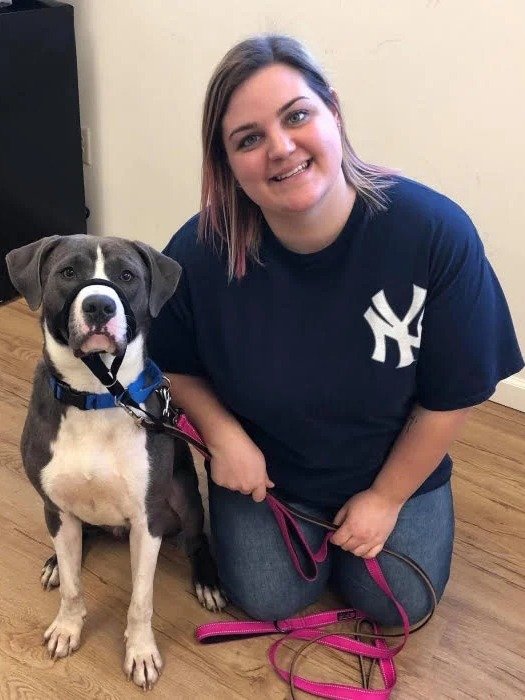
By Amber Byleckie, CSAT, CBCC-KA, CPDT-KA
Plenty of owners only learn about their dog’s separation anxiety from the aftermath, like a scratched-up door, an accident on the rug, or an unhappy neighbor. Signs of separation anxiety in dogs often show up long before any of that, sometimes while you’re still preparing to leave. I’m the Certified Separation Anxiety Trainer at Instinct NJ & PA, and below I explain how to spot it, what causes it, and which myths to let go of.
What Owners Tell Me When They Call
When families reach out, these are some of the ways they describe it:
- “He barks for hours when he’s alone.”
- “Whenever I leave, he poops on the rug.”
- “My dog panics and tries to escape from the crate when he’s alone.”
About 25% of the time, a neighbor complaint, landlord letter, or HOA notice is what finally prompts the call. Apartments make separation anxiety especially hard because of hallway noises and neighbor complaints. I also see a seasonal pattern, with more calls from teachers in the summer and fewer from my other clients, since they travel.
The Early Sign Owners Miss
Watch for excessive attention and anxiety around your pre-departure cues, like showering, changing into “outside” clothes, grabbing your keys, or putting on your coat.
Owners consistently miss this sign because they only ever see the aftermath. If your dog becomes anxious or overly attentive during that routine, take note.
Separation Anxiety in Dogs Symptoms: Mild, Moderate, and Severe
Each case presents differently, which makes it hard to assign difficulty levels. In general, though, these are the symptoms of separation anxiety in dogs I see at each level.
- Mild cases involve whining and barking when you first leave, then settling for the rest of the time.
- Moderate cases show signs of stress that come and go, with stretches of settling in between.
- Severe separation anxiety in dogs can include self-injury from excessive licking, scratching, or escape attempts, along with drooling, peeing, or pooping.
A mild label doesn’t always mean an easy case. Some dogs with “mild” whining were SO difficult to make progress with. Meanwhile, dogs I did NOT think would make any progress can now spend more than four hours alone.
What Is Separation Anxiety in Dogs?
There are three main types:
- Clinical separation anxiety. The dog can’t be separated from ONE specific person or other dog, even when someone else is home.
- Separation-related anxiety behaviors. When people say separation anxiety, they usually mean this type. Fear, frustration, pain, and other factors can cause it. The dog shows stress signals when left alone, like barking, whining, pacing, destruction, escape attempts, peeing, or pooping. Often these dogs are fine at daycare or when anyone else is around.
- Confinement anxiety. The dog is uncomfortable being in an enclosed space like a crate or pen.
People sometimes confuse confinement anxiety with separation anxiety. Some puppies that seem to have separation anxiety are dealing with a mild form of FOMO, or fear of missing out. Our separation anxiety training program addresses both, so it all works out!
What Causes Separation Anxiety in Dogs?
Nobody knows the exact cause, but it’s likely a combination of genetics, trauma, fear, and/or a lack of socialization.
Breed, age, and rescue history don’t show any pattern in my work, either. My clients’ dogs have come from breeders and from rescues, and they’ve included purebreds and mixed breeds alike.
Separation Anxiety Myths I Correct
Every one of these myths comes up in my work, and I correct them all, 1000000000%.
“I Spoiled My Dog”
Spoiling your dog and letting them sleep in your bed does NOT cause separation anxiety!
“Let Them Cry It Out”
Crying it out does nothing to change your dog’s fear. The more a dog practices freaking out, the better they become at it.
“Ignore Your Dog When You Leave and Come Home”
Ignoring your dog will only make them think something is wrong, which may cause more anxiety. I recommend avoiding over-the-top greetings and departures, but I wouldn’t fully ignore your dog either. Aim for a calm, nonchalant hello and goodbye instead.
“A Crate Will Keep Them Calm”
Crating often leads to more anxiety, so we typically don’t recommend it for dogs with separation anxiety. I explain why in How to Fix Separation Anxiety in Dogs.
Does Getting a Second Dog Help with Separation Anxiety?
Unfortunately, your dog may not see THAT dog as a source of comfort. In fact, the second dog may even learn to panic just like the first one.
“My Dog Did It Out of Spite”
Dogs have no spite emotion, whatever it may look like when you walk in. The look you see when your dog has done something “wrong” is an appeasement behavior meant to avoid conflict.
“A Tired Dog Won’t Have Separation Anxiety”
Of all these myths, this one is partly true. A tired dog typically does better during departures, but exercise alone won’t fix the problem.
If You’re Thinking about Rehoming
Some families reach out when they’re already considering rehoming their dog. When that happens, we talk openly and honestly about both the dog’s quality of life and theirs.
What to Do Next
If these signs sound familiar, the best first step is to avoid leaving your dog alone while you look for help. My training plan, along with my take on medication and calming products, is in How to Fix Separation Anxiety in Dogs.
Learn about our separation anxiety program or contact us to book a consultation with me.
About Amber Byleckie, CSAT, CBCC-KA, CPDT-KA
Amber is a Certified Dog Behavior Consultant (CBCC-KA) through the Certification Council for Professional Dog Trainers. She also holds that council’s Certified Professional Dog Trainer (CPDT-KA) credential. Each credential requires at least 300 hours of experience, a rigorous exam, and ongoing continuing education. Her separation anxiety training comes from Malena DeMartini’s Separation Anxiety Certification Program, which made her a Certified Separation Anxiety Trainer (CSAT). Amber has worked with dogs for over 15 years, has trained for about 13 of them, and has been with Instinct NJ since the day it opened. Early on, she knew she wanted to work with animals, and her childhood dog, Oscar, inspired her to become a trainer because trick training him helped their relationship grow. Her studies took her to Rutgers University, where she earned a degree in Companion Animal Science with minors in Psychology and Biology.