
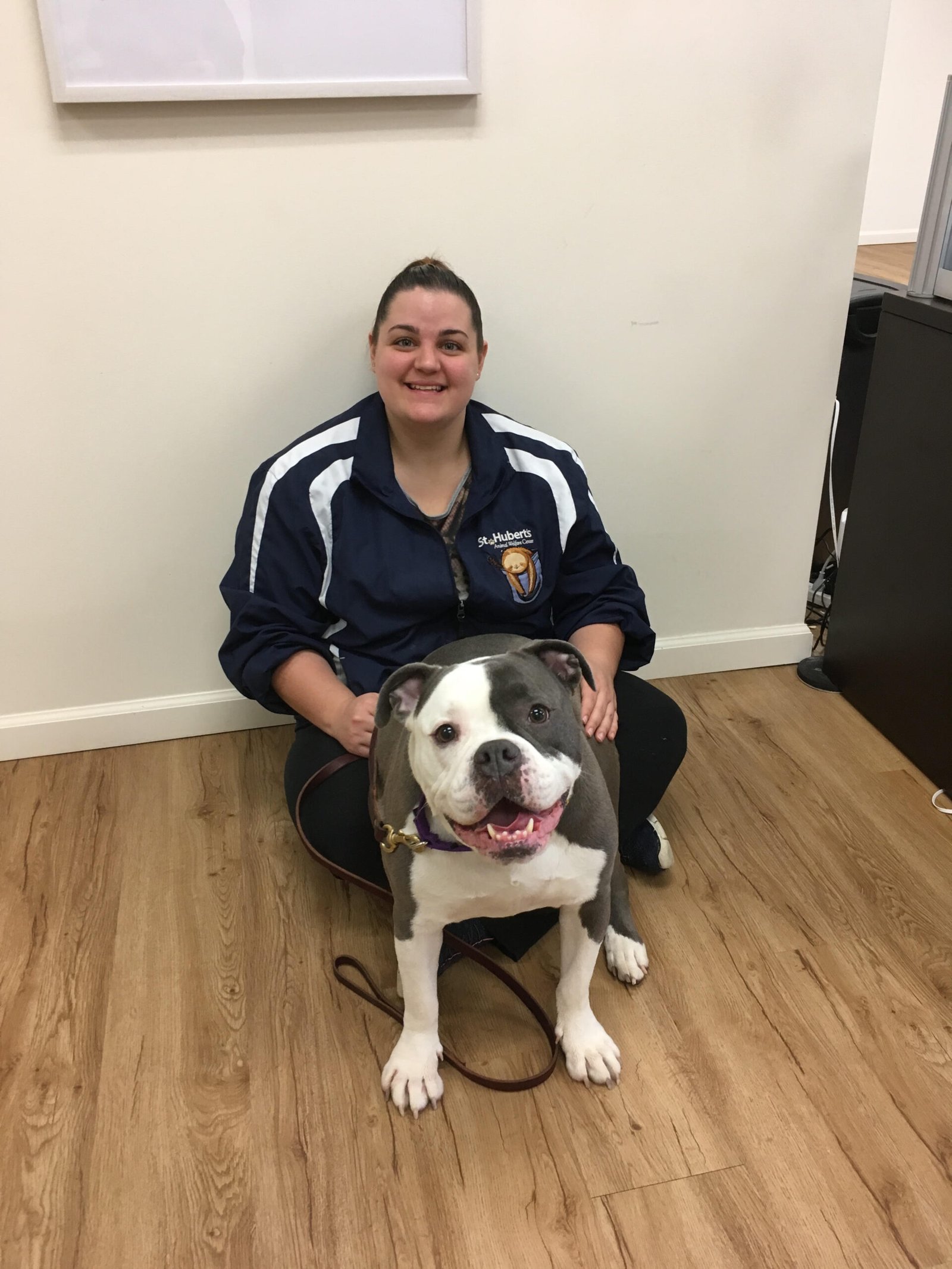
By Amber Byleckie, CSAT, CBCC-KA, CPDT-KA
Families often tell me “He barks for hours when he’s alone” or “Whenever I leave, he poops on the rug” when they first call about separation anxiety. Their number one question is how long it will take to resolve. I’m the Certified Separation Anxiety Trainer at Instinct NJ & PA, and below is the plan I walk families through, from tonight to the months ahead.
What to Do Tonight
Right now, the most helpful thing you can do is avoid leaving your dog alone. Holding to that is a big ask when you have a job, and the answer looks different for every family. Making it work usually takes some management, compromise, and creativity. Some families use daycare, while others ask their veterinarian for an as-needed medication for the days they have to leave.
Please don’t let your dog cry it out. Leaving them to panic does nothing to change their fear, and the more a dog practices freaking out, the better they become at it. Exercise can help, since a tired dog typically does better during departures. On its own, though, it won’t fix the problem.
How to Treat Separation Anxiety in Dogs: Our Five-Week Program
Treatment at Instinct runs over five weeks, with you doing the homework at home and me guiding each step.
- Initial Consultation. We meet for the first time, and I ask about medication (more on that below).
- Four Homework Sessions. You receive four sessions to do on your own, each about 30 minutes long. Following my instructions, you work on desensitizing your dog to your departures.
- Reassessment Appointment. After you finish all four, we meet virtually to review your dog’s progress together.
- Repeat. That cycle of homework and reassessment continues across the five weeks.
Throughout the program, I watch for stress signals and behavior changes. Those signs tell me when your dog is ready for a little more and when we need to ease off.
Once we reach a departure of about 30 to 60 minutes, I teach you how to build your own sessions. From there, you can keep increasing the time yourself.
What Progress Looks Like
Every dog is different, so there’s no checklist for week two or month three. What I look for is your dog showing fewer stress signals around your departures.
I know a dog is turning a corner when I see them start thinking instead of going straight to panic. My favorite moment comes later, when a dog realizes their owner has left and chooses to lie down. Some put their head back down and close their eyes instead. It almost brings me to tears every time, and it’s the one thing owners never believe until they see it for themselves.
Can Separation Anxiety in Dogs Be Cured, and How Long Does It Take?
Lots of my cases have gone well, and I often hear back from clients one to two years later. They tell me they can now leave for hours and live a normal life.
Timelines vary a lot from dog to dog. A few dogs are “resolved” within the five weeks, though that’s pretty rare, and other dogs take one to two years or more of consistent training. Two things make cases go faster: consistency at home and support from your dog sitters and veterinarian.
Success can also look different from what you first pictured. Instead of one eight-hour departure, your dog might spend four hours alone, then have a visit from a dog walker, followed by another four-hour stretch.
Regression is completely normal along the way, too. Three weeks of progress can seem to vanish because something triggered your dog, or for no clear reason at all. When that happens, I explain what’s going on and support you while we work back to where you were.
Should You Use Crate Training for Separation Anxiety?
We typically don’t recommend crating a dog with separation anxiety, since it often compounds the problem and leads to more anxiety.
Some dogs have confinement anxiety instead, which means they’re uncomfortable in an enclosed space like a crate or pen. Our separation anxiety program addresses that as well, so it all works out. Buying a stronger crate won’t solve either problem, and escape-proof crates are high on my list of purchases that don’t help.
A Case with Too Many Red Flags
Looking back, one case had so many red flags that I probably should have reconsidered taking it on. The dog had recently been adopted and was still new to the home. Its family wanted it to stay in the crate while they were gone, and they were expecting a baby. Within milliseconds of the owners leaving, the dog showed extreme physiological signs of stress.
After five weeks, we had gone from zero seconds alone to five minutes. Given everything we were working against, that’s good progress. For the family, though, five minutes wasn’t practical. Their baby was almost due, they were running out of time, and they were unhappy with where things stood. I don’t know how the case turned out after they ended their time with me.
Separation Anxiety Medication for Dogs
On Day 1, I ask about medication so I can learn your dog’s medication history and how comfortable you are with it. As a trainer, I can’t recommend or prescribe medication. What I can do is assess whether your dog’s behavior falls outside normal limits.
My assessment looks at your dog’s stress level and quality of life, your ability to avoid leaving them alone, and how they’re progressing. It helps you decide whether your dog is an appropriate candidate to be assessed for medication by your veterinarian.
If you’d rather not use medication, that’s fine, though progress may be slower. Other owners hope medication will do all the work, but it’s only a tool and isn’t meant to be the whole solution. If it works for your dog and your vet recommended it, great!
Supplements for Separation Anxiety in Dogs and Other Products
Calming supplements, chews, pheromone diffusers, CBD, and anxiety wraps can’t hurt and might help. Give them a try if you don’t mind spending the money. For dogs with significant separation anxiety, though, they typically don’t make a difference.
You don’t need special tools for this work, only time and patience. Bark collars and other quick fixes don’t help either.
Choosing Help for Your Dog
Here’s my rule for comparing trainers: any trainer who suggests punishment-based training or is against medication is not qualified for separation anxiety training.
Learn about our separation anxiety program or contact us to book a consultation with me.
About Amber Byleckie, CSAT, CBCC-KA, CPDT-KA
Amber is a Certified Dog Behavior Consultant (CBCC-KA) through the Certification Council for Professional Dog Trainers. She also holds that council’s Certified Professional Dog Trainer (CPDT-KA) credential. Each credential requires at least 300 hours of experience, a rigorous exam, and ongoing continuing education. Her separation anxiety training comes from Malena DeMartini’s Separation Anxiety Certification Program, which made her a Certified Separation Anxiety Trainer (CSAT). Amber has worked with dogs for over 15 years, has trained for about 13 of them, and has been with Instinct NJ since the day it opened. Early on, she knew she wanted to work with animals, and her childhood dog, Oscar, inspired her to become a trainer because trick training him helped their relationship grow. Her studies took her to Rutgers University, where she earned a degree in Companion Animal Science with minors in Psychology and Biology.